Cleanroom luminaires are not standard commercial fittings with a higher IP rating. They are a distinct product category, specified to prevent particle contamination, withstand aggressive cleaning regimes, and maintain room integrity during maintenance. As a UK manufacturer, we supply LED lighting for pharmaceutical production, research laboratories, electronic manufacturing, and other controlled-environment applications.
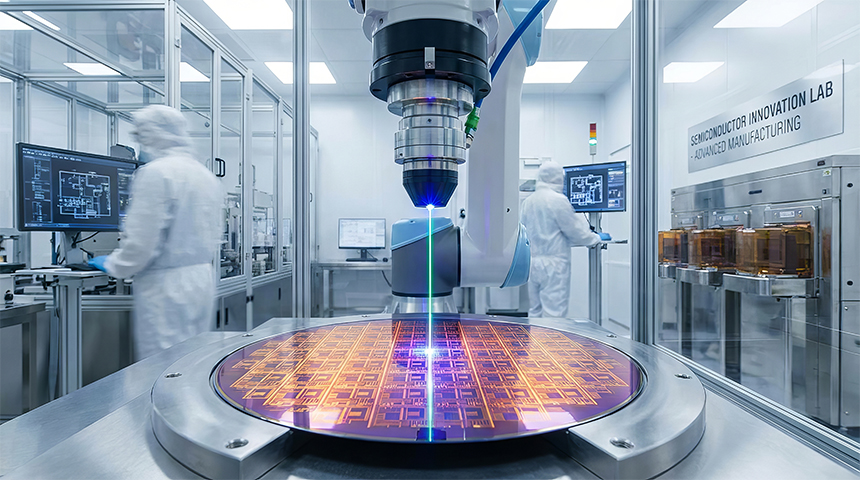
Recommended Products for Clean Environment Lighting
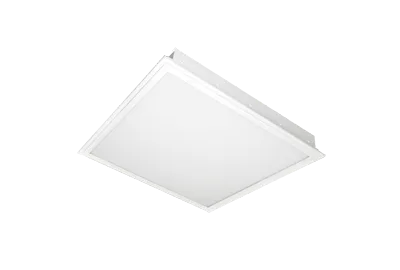
Universal IP
Recessed back lit IP65 luminaire (from below the ceiling) with a retained screw-fix diffuser
View Specification →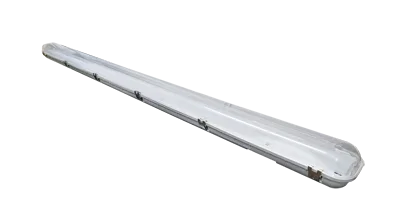
Neptune
An IP65 luminaire which is corrosion resistant and weatherproof
View Specification →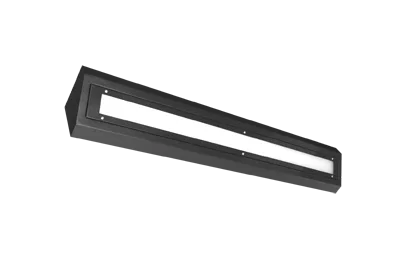
Cornice
A highly robust moisture resistant IP65 corner mounted luminaire for industrial applications
View Specification →Unsure which product is right for your project?
Our technical team can advise on the most suitable products for your specific space type, ceiling height and controls requirements.
Why cleanroom lighting is a specialist specification
A cleanroom is an environment where the concentration of airborne particulates is controlled to a defined level. The objective is usually to prevent particles from entering the room, protecting a sensitive product or process. In some applications, such as research laboratories working with pathogens or toxins, the objective is the reverse. They must prevent particles from escaping into the surrounding environment.
Lighting presents a contamination risk in both directions. A standard recessed luminaire creates an opening in the ceiling through which particles can enter or escape when the fitting is removed for maintenance. Cleanroom luminaires address this with sealed enclosures to the front face, sealed connections to the rear, and, where room integrity cannot be compromised for any reason, rear-access or walk-on ceiling designs that allow the luminaire to be serviced from the void above without disturbing the room seal.
Contrac Lighting manufactures LED luminaires in-house at our East Yorkshire factory. Our technical team can advise on the most appropriate luminaire type, IP rating, mounting method, and cleanroom classification compliance for your specific application at any stage of a project. Bespoke luminaires are available where standard products do not meet the full specification.
Contrac Lighting is ISO-certified. We manufacture luminaires at our Goole factory, with every stage from fabrication through to final tests handled in-house.
Cleanroom classification
Cleanroom classification under ISO BS EN 14644-1 is based on the permitted concentration of half-micron particles per cubic foot of air. The classification determines the minimum IP rating required for luminaires, specified separately for the room-facing front and the ceiling void-facing rear of the fitting.
| ISO BS EN 14644-1 | US 209D EQUIVALENT | TYPICAL APPLICATION |
|---|---|---|
| Class 2 | - | Containment cabinets only |
| Class 3 | Class 1 | Semiconductor wafer production |
| Class 4 | Class 10 | Microelectronics manufacturing |
| Class 5 | Class 100 | Aseptic pharmaceutical production |
| Class 6 | Class 1,000 | Optics and medical device manufacture |
| Class 7 | Class 10,000 | Pharmaceutical secondary production |
| Class 8 | Class 100,000 | Research labs, food production clean areas |
The cleanroom classification will specify the minimum IP rating for the luminaires to be used in the environment.
Ratings are specified for both the front and the back of the luminaire. Therefore the method of installation and wiring must be considered carefully to ensure the IP rating to the rear of the luminaire is maintained.
In ISO BS EN 14644 classes 2, 3 & 4 the operator does not enter the clean space because these are exclusively containment cabinets, where the operator uses robot arms or sealed glove inserts in the side of the cabinet.
IP Rating Requirements
| ISO BS EN 14644-1 | IP TO ROOM (FRONT) | IP TO VOID (REAR) |
|---|---|---|
| Class 2–4 | IP65 | IP65 |
| Class 5 | IP65 | IP65 |
| Class 6 | IP65 | IP54 |
| Class 7 | IP65 | IP54 |
| Class 8 | IP65 | IP54 |
IP ratings are defined under EN 60529 (BS EN 60529:1992). The first digit relates to protection against solid objects; the second to liquids. IP65 provides total dust protection and resistance to low-pressure water jets from all directions. Both front and rear ratings must be maintained during and after installation.
Illuminance requirements
Illuminance levels in cleanrooms depend on the nature of the work being carried out rather than the cleanroom classification itself. The figures below are drawn from BS EN 12464-1 and ISO 14644-4, and reflect the typical range across the main clean environment application types.
| APPLICATION TYPE | LUX (EM) | UGRL | U0 | RA |
|---|---|---|---|---|
| General cleanroom ambient | 500 | 19 | 0.6 | 80 |
| Pharmaceutical production | 500 | 19 | 0.6 | 80 |
| Detailed pharmaceutical / QC inspection | 750–1000 | 19 | 0.6 | 90 |
| Research laboratories | 500 | 19 | 0.6 | 80 |
| Electronic equipment manufacture | 500–750 | 19 | 0.6 | 80 |
| Microelectronics (photolithography) | 300–500 | 19 | 0.6 | 80 |
| Medical device manufacture | 500 | 19 | 0.6 | 80 |
| Precise / inspection tasks | 750–1500 | 19 | 0.6 | 90 |
| Gowning and airlock areas | 300 | 22 | 0.4 | 80 |
| Clean corridors and circulation | 200 | 25 | 0.4 | 60 |
Clean Environment Lighting Applications
The three main clean environment applications share common IP and cleanliness requirements, but differ significantly in the specific luminaire properties, illuminance levels, and special lighting requirements that each one demands.
Pharmaceutical production
Pharmaceutical cleanrooms must comply with both ISO BS EN 14644-1 and EU GMP (Good Manufacturing Practice) guidelines, which impose specific requirements on the materials and cleanability of all surfaces in the production environment, including luminaires. Glass optics are required in the highest-grade areas because plastic diffusers can degrade over time and generate particles; glass is also more resistant to the aggressive disinfectants used in pharmaceutical cleaning regimes. Luminaires must be installed with no visible joints or crevices on the room-facing surface, and all wiring connections must maintain the IP rating to the rear. DALI dimming and emergency function are available where required by the production environment.
Research laboratories
Research laboratories working with biological agents, pathogens, or chemical hazards present a different challenge to pharmaceutical production cleanrooms: the objective is often to contain rather than exclude. In these environments, luminaires must maintain room integrity under all circumstances, including during maintenance. Rear-access luminaires, serviced entirely from the ceiling void above without breaking the room seal, are the appropriate solution for containment labs. Where a walk-on ceiling is installed, load-bearing luminaires can be specified to allow full access from above. The general illuminance requirement of 500 lux applies, with higher levels for detailed laboratory tasks at bench level.
Electronic equipment manufacture
Electronic manufacturing cleanrooms require standard IP65 front-face luminaires at ISO Class 4 to 6, with the same minimal-surface and chemical-resistance requirements as other clean areas. The specific requirement that sets electronics cleanrooms apart is the use of amber or yellow light in photolithography zones, where the blue-light components of standard white LED sources can expose photoresists and destroy microcomponents. Amber light filters or purpose-built amber LED luminaires are specified for these areas, available in Y3, Y5, and Y9 filter grades corresponding to progressively narrower wavelength cuts. Standard white luminaires are used in areas of the facility away from photosensitive processes.
Medical device manufacture
Medical device manufacturing occupies a classification range typically between ISO Class 6 and Class 8, with the specific class determined by the device type, its intended contact with the patient, and the applicable regulatory framework. EU MDR (Medical Device Regulation) aligns closely with GMP principles and places similar demands on the cleanability and material compatibility of luminaires in the production environment. Inspection and quality control tasks within medical device production frequently require higher illuminance, up to 750 to 1,000 lux, and a CRI of Ra 90 or above so that defects in surface finish, labelling, or assembly are clearly visible.
Gowning rooms and airlocks
Gowning rooms and airlock areas sit at the boundary between the clean environment and the general building, and the lighting specification reflects this transitional role. A maintained illuminance of 300 lux is sufficient for the tasks carried out in gowning rooms, and the IP requirement mirrors the adjacent cleanroom since the gowning area is itself a controlled zone subject to cleaning. The luminaire design should avoid horizontal surfaces that could trap particles or cleaning agents, and should be compatible with the cleaning regime used throughout the controlled area. Emergency lighting in gowning and airlock areas must allow safe exit without breaching the room seal.
Luminaire selection and installation
The choice between recessed and surface-mounted luminaires in a cleanroom is determined by the ceiling type and the access requirements of the facility. Recessed luminaires must be sealed into the ceiling with an IP65 cover; removing the cover for maintenance creates a particle pathway, which is why sealed-rear and rear-access designs exist. Surface-mounted luminaires avoid this issue since they sit on the ceiling grid rather than within it, but they must still have smooth, wipeable surfaces and sealed wiring entries. For all installation types, the method of connecting luminaires to the electrical supply must maintain the IP rating to the rear of the fitting, which means sealed conduit entries or pre-wired harness connections.
Standards & compliance
Clean environment lighting sits at the intersection of lighting standards and cleanroom regulatory frameworks. Below are the most commonly referenced standards and guidance documents across pharmaceutical, laboratory, and electronics cleanroom projects.
Cleanrooms and Associated Controlled Environments
The primary cleanroom classification standard, defining particle concentration limits for ISO Class 2 through to Class 8. The class determines the maximum permitted particle density in air delivered to the room and therefore the minimum IP rating required for all surfaces and fittings within it, including luminaires. The standard also defines the testing methodology for cleanroom qualification, against which the luminaire installation must be demonstrated not to compromise the classification.
Degrees of Protection (IP Code)
Defines the IP rating system used to specify luminaire protection against solid particles and liquids. The first digit (0–6) covers solid object protection, reaching total dust exclusion at IP6X. The second digit (0–9) covers liquid protection, with IP65 providing protection against low-pressure water jets from all directions. For cleanroom luminaires, both the front-face and rear-face IP ratings must be specified and maintained throughout the luminaire's installed life.
Manufacture of Sterile Medicinal Products
The European Good Manufacturing Practice guideline for sterile pharmaceutical production. Annex 1 specifies Grade A to D environments with progressively less stringent particle and microbiological limits. It imposes specific requirements on surface materials and cleanability within classified areas, and luminaires in Grade A and B environments must be smooth, have no crevices or inaccessible surfaces, and be capable of withstanding chemical disinfection. The 2022 revision of Annex 1 places greater emphasis on contamination control strategy documentation, which should include a lighting maintenance plan.
Lighting of Indoor Work Places
Applied to the illuminance, uniformity, and colour rendering requirements for cleanroom working environments. The standard specifies 500 lux as the maintained illuminance for laboratory and production tasks, rising to 750 lux for detailed inspection and quality control work. A CRI of Ra 80 is the minimum for general cleanroom use, with Ra 90 recommended where accurate colour assessment of product, labels, or materials is part of the task.
Cleanroom Design, Construction and Start-up
Covers the design and construction requirements for cleanroom installations, including the performance requirements for building services and installed equipment. Relevant to the selection and installation of luminaires, particularly the requirements for surface smoothness, absence of crevices, and compatibility with cleaning and decontamination procedures. Also addresses the documentation requirements for qualification of the cleanroom installation, which should include luminaire IP ratings and maintenance procedures.
Medical Device Regulation
The EU regulatory framework for medical devices, which includes production environment requirements for devices manufactured under controlled conditions. Medical device manufacturers operating cleanrooms must demonstrate compliance with appropriate cleanliness standards as part of their quality management system. Luminaire selection, installation, and maintenance must be documented as part of the contamination control measures, and luminaires in production environments must be compatible with the cleaning and disinfection processes used for the classified area.
Bespoke Clean Environment Lighting Lighting Solutions
From CIBSE-compliant lighting designs to custom architectural fabrication, our Goole-based engineering team is ready to support your project requirements. Contact us for specification pricing, photometrics, and lead times.