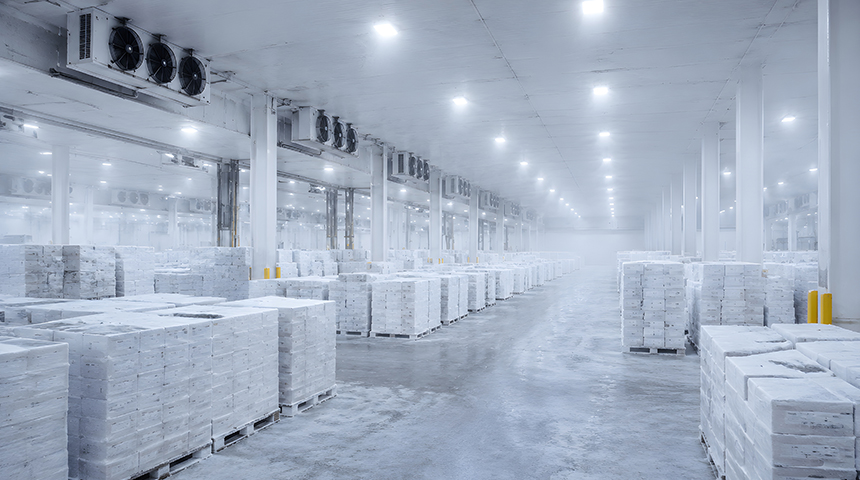
Cold store environments place unique demands on lighting systems. Standard luminaires can suffer reduced performance, condensation issues, thermal stress and premature component failure when exposed to sub-zero temperatures. As a UK manufacturer, we supply LED lighting solutions for frozen food storage, chilled distribution centres, food production facilities and temperature-controlled logistics environments.
Recommended Products for Cold Store Lighting
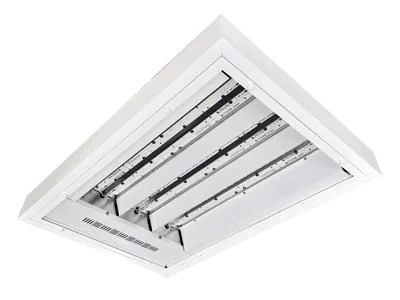
Rogue Chill
IP65 low/high bay luminaire for chiller cold store environments where protection from temperatures as low as -30°C is required
View Specification →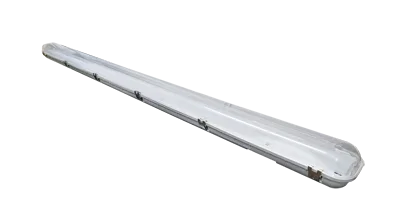
Neptune
An IP65 luminaire which is corrosion resistant and weatherproof
View Specification →Unsure which product is right for your project?
Our technical team can advise on the most suitable products for your specific space type, ceiling height and controls requirements.
Why cold store lighting is a specialist specification
Cold stores are among the most demanding industrial environments for lighting equipment. While LED technology performs efficiently at low temperatures, the luminaire housing, seals, optics, drivers and emergency systems must all be designed to operate reliably in extreme conditions.
Cold storage facilities generally fall into two categories: chilled environments operating above freezing, and frozen environments operating well below 0°C. In both cases, lighting systems must withstand temperature fluctuations, moisture ingress, cleaning procedures and frequent switching cycles while maintaining safe visibility for staff and vehicle operators.
The challenges become greater at freezer temperatures. Condensation can occur during installation and maintenance, thermal shock may affect unsuitable materials, and emergency lighting systems require careful consideration because battery performance reduces significantly in cold environments.
Contrac Lighting manufactures industrial LED luminaires in-house at our East Yorkshire facility. Our technical team can advise on temperature ratings, mounting methods, emergency lighting requirements and the most suitable product selection for cold-chain applications.
Contrac Lighting is ISO-certified. We manufacture our luminaires at our Goole factory, with every stage from fabrication through to final tests handled in-house.
Application requirements
Cold storage facilities vary significantly depending on the product being stored and the operating temperature maintained within the space.
| FACILITY TYPE | TYPICAL TEMPERATURE | LIGHTING CONSIDERATIONS |
|---|---|---|
| Chilled warehouse | 0°C to 8°C | General storage and distribution |
| Food distribution centre | 2°C to 8°C | Frequent occupancy and picking |
| Cold storage warehouse | -5°C to 0°C | High-rack storage environments |
| Frozen food storage | -18°C to -30°C | Specialist low-temperature operation |
| Blast freezer | -25°C to -30°C | Extreme temperature specification |
| Pharmaceutical cold chain | 2°C to 8°C | High reliability and monitoring |
Key Design Considerations
| REQUIREMENT | TYPICAL SPECIFICATION |
|---|---|
| Operating temperature | Down to -40°C |
| IP rating | IP65 minimum |
| Impact protection | IK08–IK10 |
| Colour rendering | Ra 80+ |
| Emergency lighting | Maintained or self-test |
| Controls | Presence detection and daylight control |
Recommended illuminance levels by application
Lighting levels within cold storage facilities are determined by the activities taking place within the space rather than temperature alone.
| APPLICATION | LUX (EM) | UGRL | U0 | RA | NOTES |
|---|---|---|---|---|---|
| General cold storage | 150 | 25 | 0.4 | 60 | Bulk storage areas |
| Warehouse aisles | 200 | 25 | 0.4 | 60 | Forklift operation |
| Order picking areas | 300 | 22 | 0.4 | 80 | Picking and packing |
| Goods-in / dispatch | 300 | 22 | 0.4 | 80 | Inspection and loading |
| Food processing areas | 500 | 22 | 0.6 | 80 | Production environments |
| Quality inspection | 750 | 19 | 0.6 | 90 | Product checks |
| Plant rooms | 200 | 25 | 0.4 | 60 | Equipment access |
| Staff circulation | 100 | 28 | 0.4 | 60 | Access routes |
Values based on BS EN 12464-1 recommendations and typical industrial cold storage applications.
Application guide
A cold storage facility contains a range of environments operating at different temperatures and serving different functions. The lighting requirements of a chilled distribution area differ significantly from those of a frozen storage warehouse, a blast freezer, or a loading bay subject to frequent temperature fluctuations.
Frozen food warehouses
Frozen food storage facilities typically operate between -18°C and -30°C and require luminaires specifically designed for reliable low-temperature operation. LED technology is particularly suited to freezer environments because light output remains stable and instant-start performance is maintained regardless of ambient temperature. High-bay luminaires are commonly used in racked storage areas where mounting heights can exceed 12 metres.
Chilled distribution centres
Distribution facilities handling fresh produce, dairy products and chilled foods generally operate between 2°C and 8°C. Lighting must support safe forklift operation, order picking and product handling while minimising energy consumption. Presence detection can significantly reduce operating costs in areas with intermittent occupancy.
Blast freezers
Blast freezing facilities expose equipment to some of the harshest operating conditions found within industrial buildings. Temperatures can fall below -30°C and luminaires must withstand extreme thermal conditions while maintaining performance and reliability. Specialist drivers and thermal management systems are essential.
Food processing facilities
Food processing environments combine low temperatures with frequent washdown procedures. Luminaires require robust IP ratings and construction capable of withstanding cleaning chemicals and high-pressure cleaning processes where applicable. Uniform illumination is essential for quality control and safe operation.
Pharmaceutical cold storage
Temperature-controlled pharmaceutical storage facilities require highly reliable lighting systems to support regulatory compliance and operational continuity. Emergency lighting and monitoring systems are often integrated into the overall facility management strategy.
Loading bays and dispatch areas
Loading docks frequently experience rapid temperature fluctuations as doors open and close throughout operational periods. Luminaires must tolerate thermal cycling and potential condensation while providing safe illumination for vehicle movements and goods handling activities.
Emergency lighting
Emergency lighting is particularly important in cold storage facilities where low temperatures, large floor areas, high storage racking, and limited natural light can make evacuation difficult during a power failure. Emergency luminaires must be capable of operating reliably at the ambient temperature of the space, whether in chilled environments or freezer stores operating below -20°C. Battery performance can be significantly affected by low temperatures, so specialist cold-store emergency lighting solutions or remotely located battery systems may be required. Emergency lighting should provide safe escape routes through storage aisles, loading areas, plant rooms, and personnel access routes while meeting the requirements of BS EN 1838 and relevant fire safety regulations.
Standards & compliance
Cold storage lighting sits at the intersection of lighting standards, workplace safety requirements, and specialist environmental performance criteria. In addition to meeting the relevant lighting and electrical regulations, luminaires must be capable of operating reliably in low-temperature environments, resisting moisture ingress caused by condensation and temperature fluctuations, and supporting safe movement throughout the facility. The standards and guidance documents below are the most commonly referenced during the design, specification, and operation of cold stores, freezer warehouses, chilled distribution centres, and temperature-controlled logistics facilities.
Lighting of Indoor Work Places
Defines illuminance, glare control, uniformity and colour rendering requirements for industrial and warehouse environments, including storage and logistics applications.
Luminaires
The primary luminaire product safety standard covers construction, performance and testing requirements.
IP Ratings
Defines ingress protection classifications. IP65-rated luminaires are typically specified to protect against dust and moisture ingress in cold storage environments.
Emergency Lighting
Specifies emergency lighting requirements to enable safe evacuation and continued operation during power failures.
Food Safety
Food industry facilities may require lighting installations that support compliance with food safety management systems and contamination prevention procedures.
Hazard Analysis
Lighting systems within food production and storage environments should support Hazard Analysis and Critical Control Point requirements through robust construction and maintenance procedures.
Bespoke Cold Store Lighting Lighting Solutions
From CIBSE-compliant lighting designs to custom architectural fabrication, our Goole-based engineering team is ready to support your project requirements. Contact us for specification pricing, photometrics, and lead times.