Public sector buildings carry a unique combination of requirements: demonstrable value for taxpayers, long-term energy cost reduction, compliance with net zero commitments, and reliable performance across diverse estate types. As a UK manufacturer, we supply LED lighting for civic offices, council chambers, libraries, community centres, courts, depots, and the full range of local authority building types.
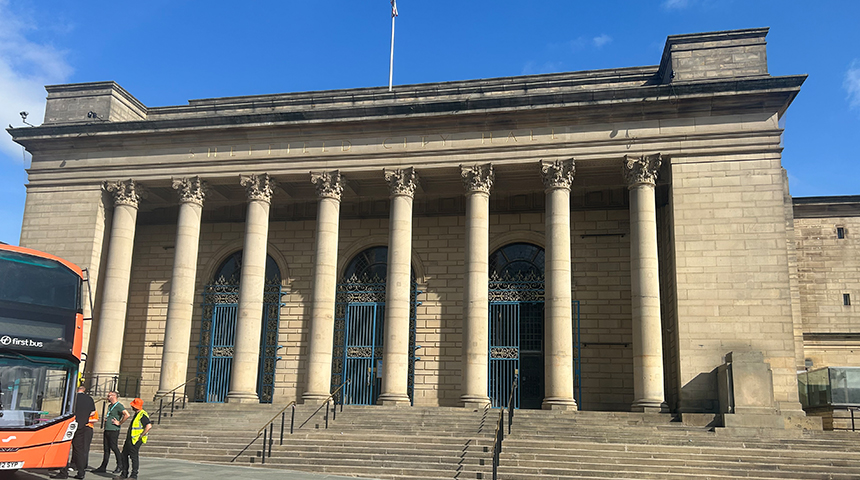
Recommended Products for Government & Local Authority Lighting
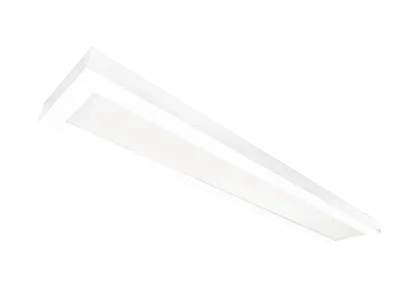
Blok
High quality linear lighting solution with direct or direct/indirect light distribution
View Specification →
Academy
Surface mounted linear general lighting solution with opal polycarbonate diffuser
View Specification →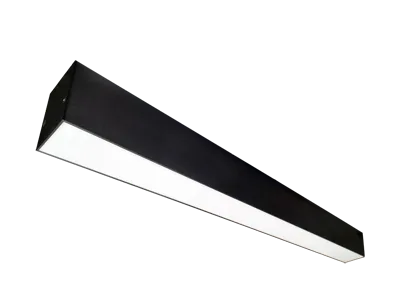
Meridian Sp
Suspended architectural linear lighting solution
View Specification →
Endor
Back lit recessed or surface panel
View Specification →Unsure which product is right for your project?
Our technical team can advise on the most suitable products for your specific space type, ceiling height and controls requirements.
Why public sector buildings deserve a specialist approach
Local authorities and government departments manage some of the most varied and widely used building estates in the country. A single council may be responsible for civic offices, libraries, leisure centres, depots, car parks, community halls, magistrates courts, and social housing common areas, each with different lighting requirements, different usage patterns, and different budget pressures.
Lighting accounts for a significant share of electricity consumption across most public sector estates, and it is one of the areas where meaningful reductions can be made quickly and with a measurable return. Typical LED upgrades from legacy fluorescent or metal halide systems deliver energy savings of 50 to 70 per cent on lighting consumption. When intelligent controls are added, the savings increase further, and the ongoing maintenance burden falls considerably.
Public sector organisations also have access to funding routes that are not available in the private sector. Salix Finance provides interest-free loans for energy efficiency projects in public bodies. The Public Sector Decarbonisation Scheme has funded LED lighting upgrades across hundreds of sites. BREEAM certification requirements for new public buildings place energy performance and wellbeing at the centre of the specification. We can advise on product selection that supports all of these frameworks.
Contrac Lighting is ISO-certified. All luminaires are manufactured at our Goole factory, with every stage from fabrication through to final test handled in-house.
Application requirements
The table below sets out the maintained illuminance, glare, uniformity, and colour rendering targets for each space type commonly found across local authority and government building estates, drawn from BS EN 12464-1 and the relevant CIBSE Lighting Guides.
| SPACE TYPE | LUX (EM) | UGRL | U0 | RA | NOTES |
|---|---|---|---|---|---|
| Open plan offices | 500 | 19 | 0.6 | 80 | CIBSE LG7; low glare; daylight dimming and presence detection |
| Cellular offices | 500 | 19 | 0.6 | 80 | Absence detection; supplementary local lighting where needed |
| Meeting and committee rooms | 500 | 19 | 0.6 | 80 | Dimmable scenes for AV and presentations |
| Council chambers and public galleries | 300–500 | 19 | 0.6 | 80 | Good vertical illuminance for facial recognition; broadcast-compatible |
| Public reception and waiting areas | 200–300 | 22 | 0.4 | 80 | Welcoming; wayfinding; good vertical illuminance |
| Libraries and reading rooms | 500 | 19 | 0.6 | 80 | CIBSE LG5 for library areas; 200 lux vertical on bookstack faces |
| Community halls and event spaces | 200–500 | 22 | 0.4 | 80 | Multi-use; full dimming flexibility; scene setting essential |
| Courts and tribunal rooms | 500 | 19 | 0.6 | 80 | Good vertical illuminance; camera-compatible; no glare for judiciary |
| Corridors and circulation | 100 | 25 | 0.4 | 40 | Presence detection; 30–40% energy saving typical |
| Stairwells | 150 | 25 | 0.4 | 40 | Tread and riser illuminance; wireless controls for sensor flexibility |
| Toilets and welfare facilities | 200 | 25 | 0.4 | 80 | Absence detection; IP44 in wet zones |
| Depots and operational areas | 200–300 | 25 | 0.4 | 60 | Robust; IP65 where appropriate; high-bay for vehicle maintenance areas |
| Car parks and external areas | As designed | — | — | 40 | BS EN 13201; presence detection; CCTV-compatible lux levels |
Application guide
A local authority estate contains a wider range of building types than almost any other organisation manages in one place. Each has its own requirements, usage patterns, and opportunities for energy saving.
Civic offices and council workspaces
Council offices house a wide range of functions, from open plan customer service and administrative teams through to departmental offices, meeting rooms, and senior management suites. The lighting brief is broadly the same as any professional office environment: CIBSE LG7 compliance, low glare for screen-based work, and controls that reduce energy consumption in areas that are intermittently occupied throughout the day. Where agile and hot-desking working arrangements are in place, wireless controls allow zone configurations to be adjusted as floor layouts change without rewiring. Absence detection in cellular offices and meeting rooms consistently delivers 20 to 40 per cent additional savings on top of the LED efficacy improvement alone.
Council chambers and public galleries
Council chambers are distinctive spaces that serve both a working function for elected members and a public-facing role for residents attending meetings. The lighting must provide adequate illuminance for reading and writing at council member positions, good vertical illuminance for facial recognition across the chamber, and a quality of light that reads well on camera where proceedings are broadcast or recorded. Public galleries need enough light for visitors to participate comfortably without the lighting creating a distracting contrast between the gallery and the floor. A dimmable, multi-scene control system allows the chamber to transition between meeting configuration, public event, and maintenance modes without manual intervention.
Libraries and reading areas
Public libraries combine several distinct lighting environments: general reading and study areas requiring 500 lux at desk height, book stack areas needing 200 lux on the vertical face of shelving, children's areas benefiting from warmer, more welcoming light, and digital resource areas where screen glare must be managed. CIBSE LG5 provides the primary reference for library lighting. The increasingly multi-use nature of modern public libraries, which often host events, community groups, and flexible workspace alongside traditional lending functions, makes multi-scene dimming controls an important part of the specification so that the space can shift character without reconfiguring the installation.
Community halls and multi-use venues
Community halls managed by local authorities serve a very wide range of uses: public meetings, fitness classes, children's activities, polling stations, exhibitions, and social events all take place in the same space, often with different ambience and illuminance requirements. Full dimming flexibility across all circuits is the most important single specification decision for community halls, since a fixed illuminance level will serve none of these uses particularly well. Scene setting allows the space to be configured appropriately for each use without requiring occupants to understand or operate complex controls. Robust luminaires that can withstand occasional impact from activities are appropriate, particularly in halls used for sports or fitness.
Courts and tribunal facilities
Magistrates courts, crown courts, and tribunal facilities managed by local authorities or HMCTS require careful lighting design to support both the formal proceedings and the wellbeing of all participants. Adequate illuminance for reading documents and taking notes, good vertical illuminance for facial recognition across the courtroom, and glare control for the judiciary and court reporters are the primary requirements. Where video link technology is in use for remote hearings, the lighting must be compatible with camera systems and avoid creating hot spots or shadows on participants' faces. Emergency lighting provision must support the continuation of proceedings if mains power fails.
Depots, workshops, and operational facilities
Local authority depots house highways maintenance teams, refuse and recycling operations, parks and grounds staff, and a range of other operational services. These spaces have the practical requirements of any industrial or warehouse environment: adequate illuminance for safe vehicle and equipment movement, robust luminaires that can withstand the physical environment, and IP ratings appropriate to the specific conditions in each area. Vehicle maintenance workshops require higher illuminance for inspection and repair tasks, and where vehicles are serviced in pits, adequate pit lighting is a safety requirement. Presence detection in areas that are intermittently occupied delivers reliable energy savings without affecting operational flexibility.
Public reception and customer service areas
Public-facing reception and customer service areas in civic buildings carry two briefs that must be balanced: the practical requirement for staff working at counters and screens, and the welcoming, accessible environment expected by members of the public accessing council services. Good vertical illuminance supports clear communication and facial recognition across the counter, while a comfortable ambient level in waiting areas avoids the institutional feel that can make council buildings feel unwelcoming. Where customer service areas are open to the public during evenings or at weekends, presence detection or time-based controls manage energy use during quieter periods without requiring manual intervention by staff.
Emergency lighting
Emergency lighting is mandatory across all occupied public sector buildings and should be included in the specification from the outset rather than added at completion. The diversity of building types in a local authority estate means that emergency lighting requirements vary considerably: a civic office has straightforward escape route requirements, while a community hall used for public events or a courthouse has more complex provisions. BS 5266-1 requires 1 lux minimum on escape route centrelines and 0.5 lux in open areas exceeding 60m². Self-test emergency luminaires reduce the manual testing burden considerably across large, multi-site estates, and are compatible with central monitoring systems that provide compliance reporting across all buildings from a single interface.
Standards & compliance
Public sector lighting projects sit at the intersection of technical standards, energy efficiency obligations, and funding frameworks that are specific to the public sector. Below are the most commonly referenced across local authority and central government building projects.
BS EN 12464-1: Lighting of Indoor Work Places
The primary reference standard for illuminance, uniformity, glare limits, and colour rendering across all occupied areas of public sector buildings. Applies to offices, libraries, reception areas, corridors, welfare facilities, and operational spaces. Referenced alongside CIBSE Lighting Guides for specific building types including LG7 for offices, LG5 for libraries, and LG9 for buildings other than offices where appropriate.
Building Regulations Part L: Conservation of Fuel and Power
Applies to new-build and substantially refurbished public sector buildings. The 2021 revision raises efficacy requirements and mandates controls capable of demonstrating demand response. Public sector organisations often have carbon reduction commitments that go beyond Part L minimum requirements, and LED luminaires with intelligent controls are the standard route to both statutory compliance and voluntary carbon reporting targets.
Salix Finance: Public Sector Energy Efficiency Loans
Salix Finance provides interest-free loans to public sector organisations for energy efficiency projects, including LED lighting upgrades. Projects are repaid from the energy savings generated by the installation, making them cashflow-neutral from day one in most cases. Salix is available to local authorities, NHS trusts, schools, and central government departments. Lighting projects are among the most straightforward Salix applications, with clear, measurable energy reductions and reliable payback periods.
Public Sector Decarbonisation Scheme
The UK Government's PSDS has provided grant funding for energy efficiency and low-carbon measures across public sector buildings, with LED lighting eligible as part of a broader decarbonisation package. Phase 4 runs until March 2028. Lighting upgrades funded through PSDS have delivered measurable carbon reductions across hundreds of public buildings, with lighting energy reductions of 50 to 90 per cent commonly reported. Applications must be linked to a heat decarbonisation plan.
BS 5266-1: Emergency Lighting
Governs emergency lighting provision across all public sector building types. Specifies 1 lux minimum on escape route centrelines and 0.5 lux in open areas exceeding 60m², with exit signs visible throughout. Self-test emergency luminaires and central monitoring systems significantly reduce the manual testing and recording burden across large, multi-site local authority estates where manual compliance testing is time-consuming and costly.
BREEAM: Building Research Establishment Environmental Assessment Method
Required or targeted for most new-build public sector buildings and major refurbishments. BREEAM credits relevant to lighting cover energy performance (Ene 01), visual comfort and glare (Hea 01), and light pollution (Pol 04). Many local authorities target BREEAM Excellent for new civic buildings as part of their sustainability commitments. High-efficacy LED luminaires with appropriate controls, combined with daylight-linked dimming, support multiple BREEAM credits simultaneously.
Bespoke Government & Local Authority Lighting Lighting Solutions
From CIBSE-compliant lighting designs to custom architectural fabrication, our Goole-based engineering team is ready to support your project requirements. Contact us for specification pricing, photometrics, and lead times.