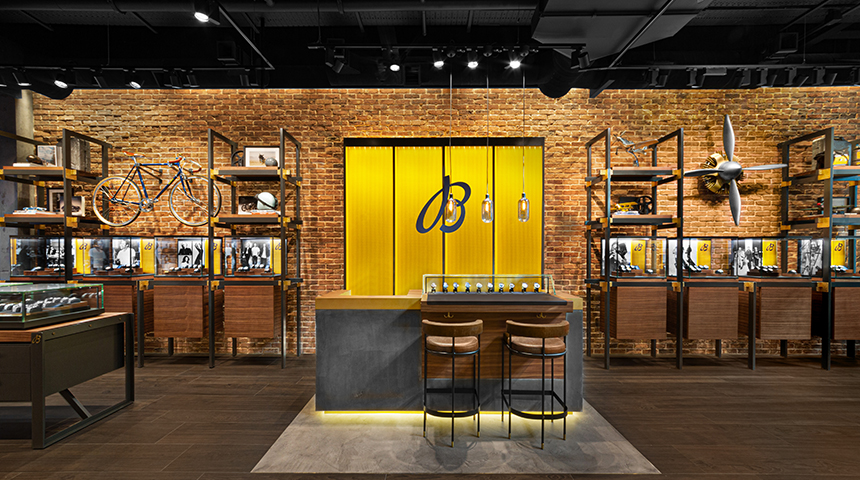
Retail lighting guides customers through a store, draws attention to product displays, reinforces brand identity, and directly influences purchasing decisions. As a UK manufacturer, we supply LED lighting solutions for high street shops, showrooms, supermarkets and retail parks.
Recommended Products for Retail Lighting
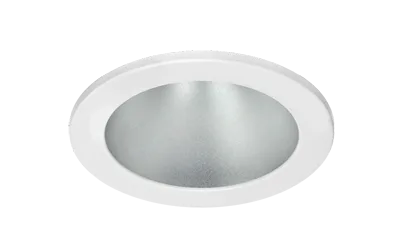
Gravity
A circular recessed downlight luminaire with die-cast aluminium twist and lock bezel
View Specification →
Shard
Architectural triangular feature pendant
View Specification →
Space
Architectural square feature pendant
View Specification →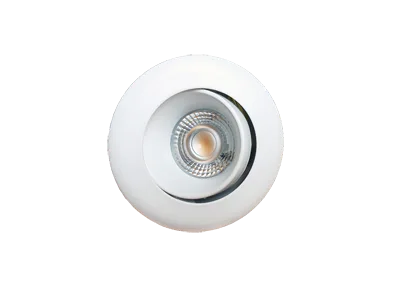
QDT
Architectural 30° adjustable recessed low glare downlight
View Specification →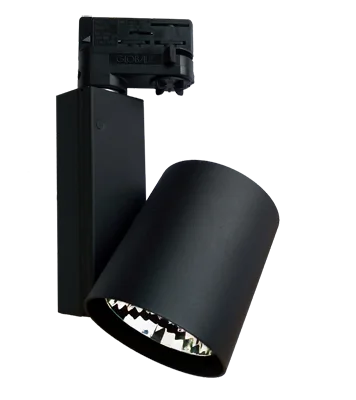
Quartet QSL
Track-mounted spotlight suitable for 3-circuit track
View Specification →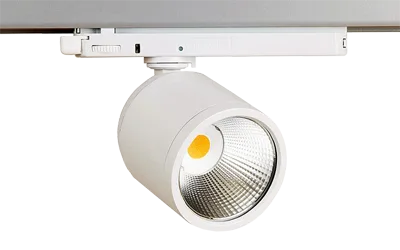
Quartet QEL
Track-mounted spotlight powdered by an in-track driver. Suitable for 3-circuit track
View Specification →Unsure which product is right for your project?
Our technical team can advise on the most suitable products for your specific space type, ceiling height and controls requirements.
Why lighting is one of the most powerful tools in retail
The right combination of ambient light, accent sources, and colour temperature shapes how a customer feels in a space, how long they stay, and how they perceive the products in front of them. Poor lighting makes merchandise look flat, colours appear inaccurate, and spaces feel uninviting.
Colour rendering is the most important single specification decision in retail lighting. A high CRI source renders reds, greens, and skin tones accurately, making clothing look true to colour, and displays look their best. Most retail environments benefit from a minimum CRI of Ra 90, with Ra 95 or above for high-end fashion, jewellery, and food display applications.
Contrac Lighting manufactures LED luminaires in-house at our East Yorkshire factory, supplying retailers, fit-out contractors and M&E engineers across the UK. Our technical team can advise on product selection and control integration on any stage of a project.
Contrac Lighting is ISO-certified. We manufacture luminaires at our Goole factory, with every stage from fabrication through to final test handled in-house.
Application requirements
The table below sets out the maintained illuminance, uniformity, and colour rendering targets for each retail space type, drawn from CIBSE SLL Lighting Guide 8: Lighting for Retailing and BS EN 12464-1.
| SPACE TYPE | LUX (EM) | UGRL | U0 | RA | NOTES |
|---|---|---|---|---|---|
| General sales floor, ambient | 300–500 | 22 | 0.4 | 80 | Higher end of range for fashion and premium retail |
| Product display, accent lighting | 500–1000+ | 22 | 0.4 | 90 | 3:1 to 5:1 accent-to-ambient ratio typical |
| Checkout and till areas | 500 | 19 | 0.6 | 80 | Task lighting; same standard as office work |
| Fitting rooms | 300 | 22 | 0.4 | 90 | High CRI; warm CCT; flattering vertical illuminance |
| Showroom and display areas | 500–750 | 22 | 0.4 | 90 | Adjustable beam angles; high CRI essential |
| Food retail, ambient | 500 | 22 | 0.4 | 80 | Supplemented by high-CRI display lighting over counters |
| Fresh food display counters | 500–1000 | 22 | 0.4 | 90 | Ra 95+ recommended; specialist food display CCT |
| Storage and stock rooms | 200 | 25 | 0.4 | 60 | Presence detection recommended |
| Circulation and corridors | 100 | 25 | 0.4 | 40 | Back-of-house areas; presence detection |
| External fascia and signage | As designed | — | — | 80 | Brand consistency; controlled upward light |
Space-by-space guide
Retail buildings contain a wide range of areas with different lighting priorities. What serves a sales floor will not work for a changing room, a fresh food counter, or a back-of-house stockroom.
Ambient sales floor
The ambient layer sets the overall light level and atmosphere of the store. It should be high enough to allow comfortable shopping and navigation, while leaving room for accent sources to create the contrast ratios that draw attention to displays and merchandise. Most retail environments operate with an ambient of 300 to 500 lux; premium and fashion retail tends towards the higher end, where higher light levels reinforce the perception of quality. The choice of colour temperature is a brand decision as much as a technical one, with warmer tones creating an inviting, relaxed feel and cooler tones projecting a more clinical, high-tech character.
Product display and accent lighting
Accent lighting is where the most important retail lighting decisions are made. A well-placed spot or track luminaire at three to five times the ambient level pulls the eye to a product and makes it look its best. High CRI isn’t optional here, Ra 90 is the practical minimum for most display applications, and Ra 95 or above is recommended for clothing, jewellery, fresh food, and any product where colour accuracy directly influences a purchase decision. Adjustable beam angles allow displays to be relit as stock and seasonal promotions change, without any rewiring.
Changing rooms
Changing rooms have a disproportionate influence on purchase decisions, since this is where a customer makes their final judgement on a product. The lighting should be flattering without being misleading, offer good vertical illuminance to light the face and body evenly, and a CRI of Ra 90 or above so that clothing colours appear as they will look in natural daylight. Harsh downlighting directly overhead creates unflattering shadows; a combination of front-facing or angled sources produces a far better result for both the customer and the sale.
Checkout and till areas
Till areas are working environments, and the lighting requirements shift accordingly. Staff at checkout positions spend long periods on detailed tasks. Reading screens, handling products, and processing payments, which means the same UGR of 19 and 500 lux target that applies to office environments is the right reference point here. Glare onto till screens is a common problem where ambient retail lighting is retrofitted without considering the screen sightlines of checkout operators. Task lighting above till positions resolves this without compromising the ambient scheme.
Fresh food display
Fresh food counters, such as meat, fish, produce, and deli, require specialist display lighting that renders colour accurately and makes food look appealing. A minimum Ra 90 is required, and Ra 95 is worth specifying where product presentation is a key differentiator. Colour temperature choice also matters. Slightly warmer tones enhance the appearance of meat and bakery, while cooler tones work better for fish and green produce. IP-rated luminaires are required in areas exposed to moisture or regular cleaning.
Showroom and vehicle display
Showrooms for cars, furniture, and other large-format products have specific requirements that differ from high street retail. The scale of the space means high ceilings are common, and luminaires must be capable of producing useful illuminance at greater mounting heights. Colour rendering remains critical since customers are evaluating materials, finishes, and colours. Adjustable beam angles allow lighting to be directed at specific vehicles or display zones, and dimming controls allow the atmosphere to change across different times of day and different events.
Back-of-house and stock rooms
Back-of-house areas, such as stock rooms, preparation areas, service yards, and loading bays, require reliable, practical lighting rather than the layered approach used on the sales floor. Maintained illuminance of 200 lux is the standard reference for general storage, with presence detection delivering consistent energy savings in areas that are occupied intermittently throughout the day. In preparation areas where staff handle products for extended periods, the same 500 lux standard that applies to other task environments is appropriate.
Emergency lighting
Emergency lighting is mandatory in retail environments and should be specified from the outset rather than added at completion. Large retail stores with complex floor layouts and high footfall present particular challenges for emergency lighting design, since the evacuation routes must be clearly illuminated and exit signs visible throughout. BS 5266-1 requires a minimum of 1 lux on escape route centrelines and 0.5 lux in open areas exceeding 60m². Self-test emergency luminaires simplify the ongoing testing and recording burden in busy retail environments.
Standards & compliance
Retail lighting specifications involve several overlapping standards. Below are the most commonly referenced across retail projects in England, Scotland and Wales.
SLL Lighting Guide 8: Lighting for Retailing
The primary reference document for retail lighting design in the UK. Covers maintained illuminance levels, colour rendering requirements, glare control, and specific guidance for different retail environments including food retail, fashion, and showrooms. The guidance on accent-to-ambient ratios and CRI requirements for product display is the most directly useful section for specifiers.
BS EN 12464-1: Lighting of Indoor Work Places
Applied to staff-occupied areas within retail environments, including checkout positions, preparation areas, and back-of-house spaces. Defines the task illuminance and glare requirements that apply when retail areas are used as working environments rather than purely as customer-facing spaces.
BS 5266-1: Emergency Lighting
Governs emergency lighting provision across retail premises. Specifies a minimum of 1 lux on escape route centrelines and 0.5 lux in open areas exceeding 60m². Exit signs are required throughout. Large-format retail with complex layouts requires careful design to ensure all escape routes are covered and visible to customers and staff.
Building Regulations Part L: Conservation of Fuel and Power
The 2021 revision raises energy performance requirements for new-build and substantially refurbished retail buildings. LED luminaires with appropriate controls are the standard compliance route. Retail lighting is one of the largest contributors to a building's energy consumption, making the choice of luminaire efficacy and controls strategy significant from both a compliance and operational cost perspective.
BS EN 1838: Applied Lighting. Emergency Lighting
European standard covering emergency escape, standby, and open-area emergency lighting requirements. Referenced alongside BS 5266-1 on all retail projects. Specifies minimum illuminance levels, duration requirements (typically three hours for battery systems), and uniformity targets for emergency luminaires along escape routes.
BS EN 12193: Sports Lighting
Referenced where retail developments include external sports or leisure facilities, such as retail parks with adjacent gym or leisure provision. Defines maintained illuminance, uniformity, and glare requirements for sports applications distinct from general retail external lighting.
Bespoke Retail Lighting Lighting Solutions
From CIBSE-compliant lighting designs to custom architectural fabrication, our Goole-based engineering team is ready to support your project requirements. Contact us for specification pricing, photometrics, and lead times.