From a school sports hall to a padel centre, every sport and leisure environment has unique lighting requirements. As a UK manufacturer, we supply LED lighting solutions for indoor and outdoor sports facilities, gyms, pools, spas, and multi-use leisure venues of every scale.
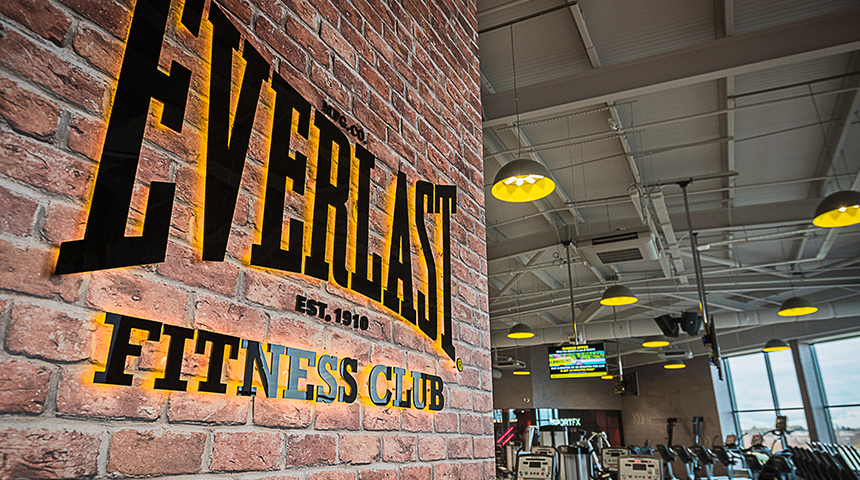
Recommended Products for Sports & Leisure Lighting
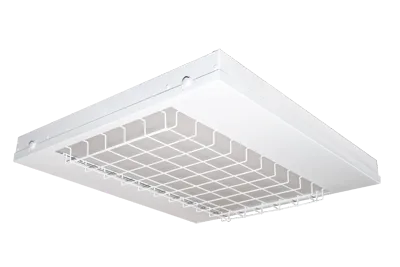
Lando Sport
Wire guarded low/high bay sports luminaire
View Specification →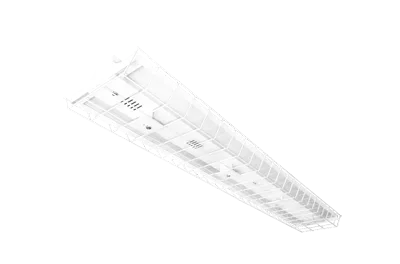
Organa Sport
Wire guarded linear low/high bay sports luminaire
View Specification →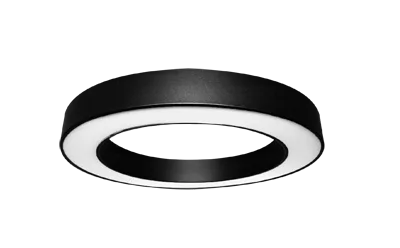
Solar
Architectural circular suspended feature pendant.
View Specification →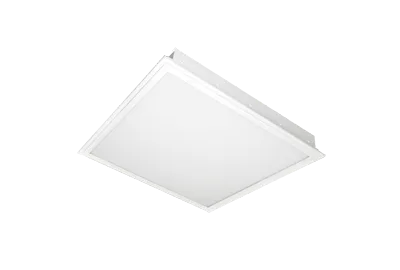
Universal IP
Recessed back lit IP65 luminaire (from below the ceiling) with a retained screw-fix diffuser
View Specification →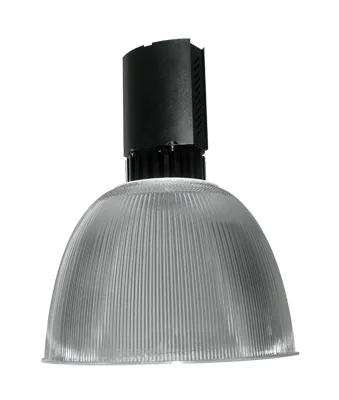
Deco
Decorative suspended luminaire, an architectural solution for both ambient and accent lighting
View Specification →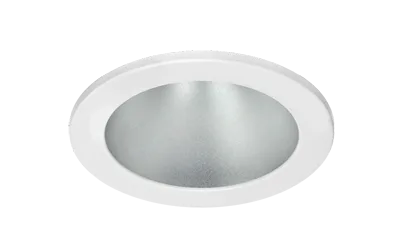
Gravity
A circular recessed downlight luminaire with die-cast aluminium twist and lock bezel
View Specification →Unsure which product is right for your project?
Our technical team can advise on the most suitable products for your specific space type, ceiling height and controls requirements.
Why sports and leisure lighting needs a specialist approach
Sports and leisure facilities are among the most varied and demanding environments to light correctly. A single leisure centre might contain a sports hall, a swimming pool, a gym, a studio, a spa, a café, and a reception area, each with completely different requirements for lux levels, colour rendering, IP ratings, impact resistance, and atmosphere.
In sports applications, the quality and consistency of illumination directly affects the performance and safety of participants. Players need to be able to track fast-moving objects, judge distances accurately, and see clearly across the full playing area without glare or distracting shadows. The relevant standards, CIBSE LG4 for indoor sports and BS EN 12193 for sports lighting generally, are not aspirational targets but minimum requirements for safe play.
Contrac Lighting manufactures LED luminaires in-house at our East Yorkshire factory, supplying leisure operators, local authorities, schools, clubs, and M&E contractors across the UK. Our technical team can advise on product selection, IP requirements, controls integration, and compliance at any stage of a project.
Contrac Lighting is ISO-certified. We manufacture luminaires at our Goole factory, with every stage from fabrication through to final tests handled in-house.
Application requirements
The table below sets out the maintained illuminance, uniformity, and colour rendering targets for each sports and leisure space type, drawn from CIBSE LG4 (Lighting for Sports), BS EN 12193 (Sports Lighting), and BS EN 12464-1.
| SPACE TYPE | LUX (EM) | UGRL | U0 | RA |
|---|---|---|---|---|
| INDOOR SPORTS | ||||
| Sports hall, school / leisure | 300 | 22 | 0.6 | 65 |
| Sports hall, club / regional competition | 500 | 22 | 0.7 | 65 |
| Swimming pool hall | 300 | 22 | 0.6 | 80 |
| Gymnasium / fitness studio | 300 | 22 | 0.6 | 80 |
| Squash court | 300–500 | 22 | 0.7 | 65 |
| Indoor tennis court | 500 | 22 | 0.7 | 65 |
| Badminton court | 300–500 | 19 | 0.7 | 65 |
| LEISURE AND WELLNESS | ||||
| Spa and relaxation areas | 100–200 | 19 | 0.4 | 80 |
| Treatment rooms | 300–500 | 19 | 0.6 | 90 |
| Changing rooms and wet areas | 200 | 25 | 0.4 | 80 |
| Reception and entrance | 200–300 | 22 | 0.4 | 80 |
| Café and social areas | 200 | 22 | 0.4 | 80 |
| OUTDOOR SPORTS | ||||
| Football pitch, training | 75–200 | — | 0.5 | 65 |
| Football pitch, club / competition | 200–500 | — | 0.6 | 65 |
| Tennis court, outdoor | 200–500 | — | 0.7 | 65 |
| Padel court | 300–500 | — | 0.7 | 65 |
| Athletics track | 100–300 | — | 0.5 | 65 |
| Car park and external circulation | As designed | — | — | 40 |
Space-by-space guide
Sports and leisure facilities span a wider range of environments than almost any other building type. Each area has its own performance requirements, IP demands, and atmosphere considerations.
Sports halls
Sports halls are multi-sport environments by nature, and the lighting must serve basketball, badminton, volleyball, netball, and any other activities the hall is used for, often on the same day. Luminaires must be IK10 rated as a minimum to resist ball impact, and should be positioned between courts rather than directly above playing areas or at the ends of the hall where they can enter a player's sightline. Dimmable multi-scene controls allow the same hall to operate at 300 lux for recreational use, step up to 500 lux for club competition, and reduce to a lower ambient level during non-sporting use, making presence detection and scene setting a practical and worthwhile investment in multi-use facilities.
Gyms and fitness studios
Gym environments span a wide range of activities under one roof, from cardio equipment areas to free weights, functional training zones, and group fitness studios. Cardio and weights areas benefit from good vertical illuminance so that mirrors and equipment are clearly visible from multiple angles, while group fitness and yoga studios often call for dimmable circuits with a warmer colour temperature to support different class types and moods. Studios used for cycling classes or HIIT training typically benefit from a cooler, more energising light, whereas those used for stretching, pilates, or mindfulness work better with warmer, softer illumination.
Outdoor courts (tennis, padel, netball)
Outdoor court lighting needs to deliver high uniformity across the playing surface without creating glare for players looking up to track the ball. For tennis and padel, side-mounted luminaires at column height are the standard approach; overhead pole-mounted floodlights introduce glare at the critical overhead viewing angle. Padel courts present a specific challenge because the glass enclosure reflects light internally, which means luminaire placement must account for reflections off the back and side walls. IP65 is the minimum for all outdoor sports luminaires, and the controls system should allow courts to be lit individually, so clubs can charge per court and reduce energy costs when courts are unoccupied.
Spa and wellness areas
Spa and relaxation environments require the most careful atmospheric lighting of any space in a leisure facility. The ambient level should be low, typically 100 to 200 lux, with warm colour temperatures of 3000K or below to create a calm, restorative environment that is clearly distinct from the active sports areas elsewhere in the building. Dimming is not optional here, it is the primary means by which the space signals its purpose. Treatment rooms require separate consideration, with higher task illuminance and CRI 90 or above so that therapists can assess skin condition accurately. All luminaires in wet spa areas must carry appropriate IP ratings, and exposed metalwork should be non-corrosive.
Changing rooms and welfare facilities
Changing rooms are a welfare requirement as much as a functional one, and the lighting should reflect that. A minimum of 200 lux with good uniformity gives users enough light to dress, use lockers, and navigate safely, while presence detection manages energy consumption in spaces that have unpredictable occupancy across the operating day. In wet areas, such as shower rooms, saunas, and steam rooms, the IP rating of luminaires must match the zone classification under BS 7671, with IP65 appropriate for the most exposed positions. Good mirror lighting with adequate vertical illuminance is an often-overlooked detail that makes a significant difference to users' perception of the facility.
Reception, café, and circulation
The public-facing areas of a leisure facility are where first impressions are made and where members spend time before and after activity. Reception and entrance areas should feel welcoming rather than institutional, with higher lux at the front desk for staff working on screens and softer ambient light in the waiting and seating areas. Café and social spaces work best with warmer colour temperatures and lower ambient levels than the sports areas, distinguishing them as places to relax and socialise. Corridors and circulation routes need adequate lux for safe movement and wayfinding, with presence detection delivering reliable energy savings in areas that are frequently unoccupied between peak periods.
Standards & compliance
Sports and leisure lighting draws on several overlapping standards depending on the application type. Below are the most commonly referenced across UK sports and leisure projects.
BS EN 12193: Light and Lighting. Sports Lighting
The primary European standard for sports lighting, covering illuminance levels, uniformity, glare, colour rendering, and flicker for a wide range of sports both indoor and outdoor. Defines three levels of use (recreational, training/club, and competition) with progressively higher requirements for each. Referenced alongside governing body guidance from Sport England, the FA, the LTA, and other national sports bodies for specific facility types.
SLL Lighting Guide 4: Lighting for Sports
UK guidance document providing supplementary recommendations for sports lighting beyond the minimum criteria in BS EN 12193. Covers cylindrical illuminance for facial recognition in team sports, specific guidance for sports halls, swimming pools, and outdoor facilities, and the interaction between natural and artificial lighting in venues with rooflights or glazed facades. CIBSE LG4 is frequently referenced in local authority and leisure trust tender documents.
BS EN 12464-1: Lighting of Indoor Work Places
Applied to the non-sport areas of leisure facilities including reception, offices, café and social areas, changing rooms, and welfare facilities. Defines maintained illuminance, uniformity, glare limits, and colour rendering for each space type. Also referenced for gym and fitness environments where EN 12193 does not provide specific guidance.
BS 5266-1: Emergency Lighting
Governs emergency lighting provision across all areas of a sports and leisure facility. Sports halls exceeding 60m², pool halls, and changing facilities all require emergency lighting provision. The standard specifies 1 lux minimum on escape route centrelines and 0.5 lux in open areas. Self-test emergency luminaires significantly reduce the manual testing burden in busy leisure facilities where access outside operating hours is restricted.
BS 7671: IET Wiring Regulations (18th Edition)
Defines the zone classification system for wet and special locations, directly applicable to swimming pool halls, changing rooms, sauna rooms, and spa areas. IP ratings for luminaires in each zone are determined by their distance from water sources: Zone 0 (in water) requires IPX8; Zone 1 (above the bath or shower basin) requires IPX5; Zone 2 (the surrounding area) requires IPX4 as a minimum. Compliance with BS 7671 zone requirements is a mandatory element of any pool or spa electrical installation.
Building Regulations Part L: Conservation of Fuel and Power
Applies to new-build and substantially refurbished leisure facilities. Lighting energy consumption is particularly significant in sports and leisure buildings because of the high output luminaires required in sports halls, pool halls, and outdoor facilities. LED luminaires with appropriate controls are the standard compliance route, and presence detection in sports halls and outdoor courts can deliver substantial energy savings against continuously switched installations.
Bespoke Sports & Leisure Lighting Lighting Solutions
From CIBSE-compliant lighting designs to custom architectural fabrication, our Goole-based engineering team is ready to support your project requirements. Contact us for specification pricing, photometrics, and lead times.